Thursday, July 31, 2014

Alternative sweeteners for better health and flavor

I watched the Fed Up movie a couple of weeks ago, and although I spent most of its length feeling impotent and really uncomfortable, I can't recommend it enough. Among many things, it portrays the effects of the crazy amounts of sugar we are--mostly inadvertently--consuming, through the machine-made, super convenient, ubiquitous foods that have been carefully designed to be liked by most human taste buds, and which are making us and our children very sick and  physically, socially and emotionally addicted to them. OK, must admit, it wasn't like watching "27 Dresses"...

I know I do sound like a broken record (oh! remember those?), but the solution again is provided in Michael Pollan's (who is interviewed in the documentary) motto calling us to "Eat [real] food. Not too much. Mostly Plants." Plus his encouragement to COOK at home, as this is the only way we can know exactly what and how much we are adding into our food, while we create bonding relationship with whomever we're cooking with, but let me get back to this post's point.


Yes, sugar is addictive, there's no question about it, but as opposed to other addictions that we can't do in "moderation," for most of us (please note that we are ALL different, and I can't give you personal suggestions through a blog!), small amounts of sugar are fine to handle, especially when they come together with whole foods rich in fiber and protein. I know my latest blog posts have been a bit alarming, and I hate doing that to you or even to myself, but on the other hand, knowledge is power, and we need power to make our bodies powerful, so here are my thoughts and suggestions so your life (or mine) doesn't have to be lived in absolute sweetness celibacy.


1. Don't demonize your sweet tooth, but taper down the amounts of sugar you consume to find the minimum that still satisfies you. For example, don't buy flavored yogurt. Purchase plain, and sweeten it lightly (alternatives offered below), and try it. If you need to, add a tiny more sweetener and taste again. Repeat until you find it satisfactory, and enjoy it. Later, you can just add a tiny bit less every time until you find the very minimum you need to find it pleasant. This can be applied to coffee, tea, oatmeal and everything else. Sugar tolerance builds up, but you can also decrease it. When baking, cut down the total sugar amount in the recipe between 1/3 and 1/2. It will still taste nice and sweet! Don't let anyone else decide how much sugar you are going to consume. Take charge of it yourself!


2. If purchasing a processed (packaged) product, read its label! Not necessarily for calorie content (I'm not an advocate of calorie counting), but check out how much sugar the product has. It's listed in the nutrition information. Keep in mind, that we should aim to keep our sugar consumption below 24 g/day (the equivalent to 6 teaspoons or 2 tablespoons), so if you're starting your day with sweetened cereal, you might already be giving your body a large enough load of sugar to process for the whole day! Aim to skip products with more than 8g sugar per serving (and check out the size of the serving, as often, it's only a fraction of the package).


3. Don't drink your sugar! Sodas, lemonades and even 100% juice are overwhelming to our body due to their lack of fiber and excess of sugar (yes! it includes fresh, organic, local, made with love, etc). It's quite easy to sip in lots of sugar when there's no chewing, fiber or protein involved to slow down its absorption. Especially, if it comes with your name on its red label!!! But please, please avoid diet soda, that's even worse! 

Can't stand plain water? Infuse water with citrus, herbs, fruit chunks, or a tiny amount of juice.

4. Eat slowly, mindfully and joyously, appreciating the flavor, consistency, scent and every nuance of the food you are eating. When you eat a treat, don't eat it on a rush or with other activities distracting you, don't feel guilty and give your brain and your senses a chance and the time to feel satisfied and to register pleasure.


5. Add flavor: Sweet spices such as vanilla, cinnamon, nutmeg, allspice, cardamom and ginger enhance the sweetness of foods without adding sugar. Experiment with a sprinkling, and you'll see how it works!


6. I've found unrefined sweeteners to be a great solution to my own sugar/sweet cravings. Most of them have rich, interesting flavors, so they make treats more satisfying. They are not just plain "sweet." I once heard award-winning pastry chef, author and TV host Johnny Iuzzini say how often people forget that sugar is not a flavor, that sugar just adds sweetness, so we don't need to abuse it, and we do need to find flavor in the other ingredients we're adding (see point #5). Sugar is kind of unidimensional, and some alternative sweeteners are much richer and flavorful, which is an extra point on their side. This doesn't mean that natural alternative sweeteners are sugar free, innocuous, or that we should use them as free for all, but they can do way more for your palate (still in smaller amounts) and add small amounts of nutrients, while sugar is only a source of empty calories. If you are a goop.com reader, you might have already read what Dr. Frank Lipman wrote via Paltrow about his favorite alternative sweeteners. As usual--and despite my husband rolling his eyes-- I was a big fan of the piece. The link for the post is here. I'll just add a couple of things and my own guide to alternative sweeteners (which I started planning way before Paltrow wrote about them, but I'm a lonely snail). If you want to know which one you should get, I'd recommend variety, this way I feel there's less risk of addiction (either physical or even an emotional attachment to the sweetener) and more opportunity for creativity and for finding the right match to each recipe and mood.Also, research keeps changing opinions, just as it happened with agave nectar, which skyrocketed only to be found to be less than the amazing alternative it was once thought to be. So for now, these are the best choices.
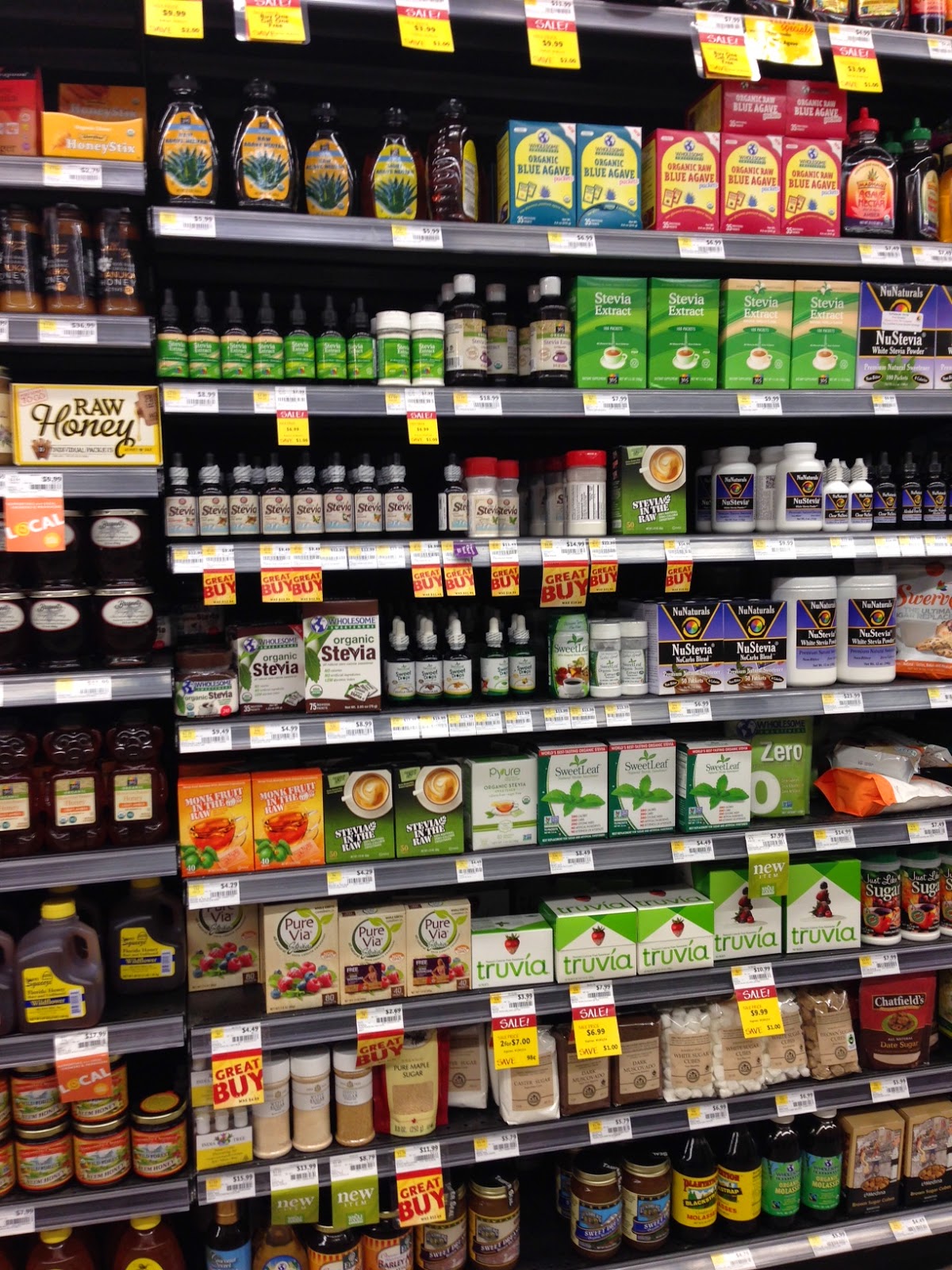
So many options...so hard to decide


STEVIA
PROS: The only sweetener that doesn’t have a real impact in blood sugar, this South American plant extract is many, many times sweeter than sugar, so a tiny bit goes a long way. It’s basically calorie free, and its main sugars are stevioside and and rebaudioside, not fructose. 
CONS: -Baking with it is tricky, as you need to find a substitute for the bulk of sugar you are removing from the recipe when using stevia. I recommend using the liquid or powdered all natural stevia extract, as it’s less processed than the commercial, mass produced brands.
             -Some people find its taste unpleasant (I wished I didn't, but I'm in that group!)

COCONUT NECTAR (LIQUID) AND COCONUT SUGAR (CRYSTALS)
PROS:
This natural and sustainable sweetener is produced from the sap of the coconut flowers. It has a complex and delicious flavor (but doesn’t taste like coconut at all). It is higher in nutrients such as potassium, magnesium, zinc, iron and vitamins B1, B2, B3, B6, C and antioxidants than other sweeteners. In crystallized form, it can be substituted for regular or brown sugar 1:1. Has a low glycemic index (about 35, compared to sugar's 60, which means that it's absorbed much slower). It only contains 10% fructose.
Goes well with chocolate, cinnamon, oats, nuts and seeds.

CONS: It can only be found in specialty and health food stores, and it doesn't come in cheap.People allergic to coconut could react to it.
 

ORGANIC RAW HONEY
PROS:
-Raw honey (can’t be pasteurized, as it looses most of its nutritional value)) contains minerals such as calcium, iron, zinc, potassium, phosphorous, magnesium, copper, chromium, manganese and selenium, which are indispensible for blood sugar balance. Raw honey is also rich in disease-preventive substances such as antioxidants, enzymes, and B vitamins.
             -Honey is 1.5 times sweeter than sugar, so less of it is needed to sweeten a product.
             -Never spoils

             - It has terroir: varies flavors vary according to the place and the flowers of the honey’s origin. Usually lighter-colored honeys have milder flavor, but the darker ones are richer in antioxidants.
              -Raw honey has antibacterial, anti-viral and anti-fungal qualities. Especially Manuka honey, from New Zealand. Local honey has been suggested to help heal local seasonal allergies.
              -Pure raw honey is kosher. It doesn’t even require rabbinical supervision.
Goes well with citrus, berries, stone fruits, almonds and other nuts.
CONS:
Honey does contain about 40%fructose, and does have an effect on blood sugar 
             -It’s not worth to use raw honey in baking, as the heating process affects most of its benefits. People following special diets (such as SCD and GAPS) can use honey as their only sweetener alternative, in these cases, if submitting it to a heating process, it's not worth investing in raw honey. 

PURE MAPLE SYRUP

· PROS:Obtained from the sap of the maple tree, recent research has found that 100% pure maple syrup contains 20 unique health-promoting compounds with antioxidant and anti-inflammatory properties, and it’s been even been suggested that  pure maple syrup may help treat diabetes.  
      It has a complex, delicious flavor, and medium glycemic index.

   Goes well with apples, pears and other fruits, nuts, grains, sweet potatoes, squash and pumpkins, cinnamon and other spices
   CONS: Real maple syrup is expensive, but DO NOT substitute it for “pancake syrup,” which is artificially colored corn (often high fructose) syrup. 

   DATE PASTE


     PROS:

·       Dates are rich in fiber, contain a nice variety of antioxidants, as well as potassium, sodium, manganese, copper, vitamin K, vitamin A, folates, niacin and 20 different amino acids, phosphorus, calcium iron and zinc.

·        - They add a wonderful flavor and fudgy texture to baked goods and are great in smoothies and other drinks.

    
    Goes well with chocolate, bananas, nuts, seeds,  

    Middle Eastern foods and lovely in home-made  

    nut or seed mylks.


     CONS:

·        Substituting date paste for sugar doesn’t always work. The best results are achieved when preparing a dish that will benefit from a moist texture, such as certain cakes, brownies, smoothies, sauces, even ice cream. But doesn’t really work when crispiness is desired.
·     There’s no exact rule as to how to substitute, but usually, in volume, more date paste will be necessary for substituting a certain amount  of sugar (for example, 1 ½ cups of date paste for 1 cup sugar)
·        
Here's how to prepare date paste.


Date syrup (which is NOT date paste) might also be found in stores, 

especially at Middle Eastern or some kosher 

stores. It's made of cooked date paste in 

water until a syrup forms. 

It's also called SILAN, and has a delicious complex flavor. It's less sweet than sugar and it has way less fiber than date paste, but it can be a delicious addition to some dishes. Look for silan made only of dates and water, as there are many brands in the market with lots of additives and sugar. 
      
    YACON SYRUP
   
   PROS:
 -This Peruvian import is a low-glycemic sweetenerderived from the yacon tuber. 
·     - It tastes like molasses/maple syrup
      - 50% less calories than sugar
·    -Yacon syrup's sweetness comes from a high concentration of inulin, a complex sugar that breaks down slowly into fructooligosaccharides (FOS) that are prebiotics (feed the friendly gut flora)
·    -Yacon contains potassium, calcium, phosphorous and iron, as well as 20 amino acids.
·  Some weight-loss claims have been made about consuming yacon syrup every 
   day.                                                                                     
   
   Goes well anywhere where maple syrup or date

   paste would be used.           
     
 CONS:
·    -It's crazy expensive(but this might work as a pro: a natural portion control mechanism)
·    -Very difficult to find
·    -May cause gas, so don't eat it for the first time before going to a job interview!
    

     BLACKSTRAP MOLASSES
     PROS:

· -A byproduct of the sugar processing, is a great source of iron, copper, manganese, potassium, magnesium and selenium.
· -In small amounts, it can add a complex and delicious flavor
   Goes well with spices such as cinnamon, black pepper, vanilla, ginger, cardamom, nutmeg, allspice, cacao, beef, and particularly well in Fall dishes.
     CONS:
·  -It does have an effect on blood sugar levels
·  -It cannot substitute sugar in a recipe, as it's not sweet enough. Very small amounts should be used, as it can be bitter.

     
   SUGAR ALCOHOLS 
   These include: xylitol, glycerol, sorbitol, maltitol, mannitol and erythriol. The most widely available (and safer bet) is xylitol, although erythriol is finally appearing in the retail market (it’s been used for years in product manufacturing). Sugar alcohols tend to have zero or very little calories and zero or low glycemic index.
   PROS:

·  Xylitol and Erythriol (sold as "Zero") taste similar to sugar and come in white crystals, just like sugar and it can be substituted 1:1.
· They dissolve well and can be used for baking
· Sugar alcohols are supposed to just pass through the body unrecognized, which causes no blood sugar imbalances and for now, are considered safe.
· It’s been suggested that xylitol may help prevent cavities and cure ear infections.
·  Safe for diabetics
·  They has a long shelf life
   They don't have a bitter after taste.
   CONS:
· Gastrointestinal distress has been reported often by people consuming xylitol and other sugar alcohols 9although not as much from erythriol).
·  Xylitol is toxic to dogs and other animals.
·  Although xylitol is promoted as pure and all natural, it is a very highly processed product derived from all natural sources, and that’s why I suggest using it cautiously, and check its source. No more than 30 grams (a bit less than a tablespoon) should be consumed per day.
   Erythriol seems to be a better choice, but make sure you purchase organic certified, as it's often derived from corn, and it's better not to get the genetically modified product.  
   Sugar alcohols lack those "interesting" flavors I mentioned about the other alternative sweeteners. 

   FRUIT
   PROS: Old fashioned fresh, cooked, frozen (unsweetened), powdered or dried (unsweetened) fruit can naturally add a lot of sweetness, flavor, color, texture, antioxidants, vitamins, minerals and fiber into recipes. You can add unsweetened apple or pear sauce, fresh or dried bananas, dried figs, mulberries, goldenberries, mangoes, apricots, raisins, you name it! into baked goods, salad dressings, smoothies, spreads, toppings, meat, poultry, side dishes.... 
   CONS: Keep in mind that when fruit has been cooked or dried, dehydrated or freeze dried, the loss of moisture makes the sugars more concentrated, so less is more!
    
   FYI: nuts.com is an amazing source for all kinds of dried fruit, fruit powders and freeze dried fruit.
  
   MONK FRUIT
   PROS: Also called luo han guo, the extract of this Chinese fruit (some of it currently cultivated in New Zealand) is 300 times sweeter than sugar, and is free of calories and carbs. The small melon is rich in antioxidants and anti-inflammatory benefits. Monk fruit can be used in baking and cooking, although it cannot be substituted 1:1 for sugar, given that luo han is much, much sweeter.

CONS: It's really hard to find pure monk fruit extract or powder. Most commercial brands have either sugars (such as dextrose, molasses, sugar) or even artificial sweeteners such as Splenda, which I stay away from (and would recommend you to do the same!). 
   -Monk fruit has a slightly bitter aftertaste.


  THE NEW KID ON THE BLOCK:
   LAKANTO: A sweetener made of non-gmo fermented erythriol and monk fruit extract. 
   PROS: Zero calories and zero glycemic index. No additives, vegan and non-GMO. It has a pleasant flavor and it can be used in baking.
   CONS: It can only be purchased online (at least for now) and it's not soft in the wallet!


You might notice rice syrup, agave nectar and maybe other alternative sweeteners missing from this list. It wasn't a mistake, I can give you a whole spiel about each one, but as usual, I know I already gave you TMI for one post! But feel free to comment on this blog. I'd love to know what you think and have a conversation.


   Now, here's an invitation into action: make these granola bars that are a great on-the go alternative! They are super easy to make and are loaded with nutrients. Plus, kids love them! Use ground sunflower seeds and unsweetened sunbutter if avoiding nuts, or add some dried fruit, dark chocolate chips or switch the oil for coconut oil, and and/or substitute the almond butter for other nut or coconut butter.


                  BREAKFAST BARS 
   

   INGREDIENTS 

4.5 oz (1 1/4 cups) roalled oats (gf, if needed)

2 oz (2/3 cup) quinoa flakes

3 oz (3/4 cup) almond meal

1 oz (1/4 cup) hemp protein powder

8g (2 tbsp) ground chia

2 tsp ground cinnamon

1⁄2 tsp baking soda

1⁄2 tsp non aluminum baking powder

1⁄2 tsp fine sea or Himalayan salt
 
   2 oz (1/4 cup) extra virgin olive or avocado oil
   
   2 oz (1/4 cup) unsweetened almond butter

4 oz (1/2 cup) pure maple or yacon syrup, or coconut nectar

1 tsp pure vanilla extract
 
   METHOD
   Preheat oven to 350F.

Line a 9x9-in square pan with parchment paper, leaving a 2 -inch overhang and set aside.

In a large bowl whisk together oats, quinoa flakes, almond meal, hemp protein, chia, cinnamon, baking soda and powder, and salt, until combined.

Add in oil, almond butter, maple syrup and vanilla and mix well with either the whisk or a silicone spatula.

Pour mixture into prepared pan, pressing well with a spatula and bake until golden and set, about 20 to 25 minutes.

Allow to cool 5 to 10 minutes, until more set and cut into bars with a serrated knife.

Serve or store packed airtight for up to 5 days or double-wrap in plastic and freeze for up to 1 month. 


Wednesday, July 2, 2014

Artificial sweeteners: not really magical


Clients, friends and family members often ask me about artificial sweeteners. My opinion hasn't changed in many years, actually it keeps getting reassured as more research gets published. I don't use them myself and I don't recommend anyone to use Equal (aspartame + dextrose + maltodextrin), Splenda (sucralose), Saccharin, or NutraSweet (aspartame).


These are some of the main reasons:


1. With their sweet taste, artificial sweeteners fool our body. By design, the body prepares its hormones, neurotransmitters, enzymes, etc to utilize incoming sugar when it perceives a sweet flavor  (that's how we are engineered. It doesn't have to be table sugar, it could be from fruits or other foods containing glucose). But guess what? If no sugar comes in, but just an impostor, eventually, the neuroendocrine feedback loops built in our bodies linking pleasure, nourishment, deprivation and fat-storage get disrupted, and our brains don't even register that our appetite for sweets has been satiated, so we keep craving sweets, even if we just had Splenda in our coffee or drank a diet Coke.

It's like having a date, but instead of the guy you like (sugar) showing up, a total stranger (artificial sweetener) you are not interested in appears, and demonstrates to be completely subpar. You had spent hours getting ready plucking your eyebrows, doing your hair, applying makeup, getting a new outfit and talking to your friends about all the excitement and your future plans with this amazing man (neuroendocrine feedback loops prepping up). All for nothing! Your crush is nowhere to be seen. You feel horrible and become obsessed with finding him, you become a stalker (insatiable sugar cravings), but continue to date the man you didn't like (more Splenda) just because the one you are interested in is not available.

Please note that I'm not suggesting you to add sugar to your diet! Excess sugars are definitely problematic and are the topic of a blog post to follow this one. There are many unrefined sweet real food options that can satisfy your need/want for sweetness, but to be clear, artificial sweeteners are NOT the answer! Just continuing with the date analogy, even if you think you are in love with the guy who didn't show up (sugar), he's not worth it and is hurting you. You just need to look around some more and find your right fit (which is not Splenda either). So stay tuned...


2. There's no evidence artificial sweeteners help in weight loss. Quoting Marc David, founder of the Institute for the Psychology of Eating, "after almost 50 years of artificial sweeteners in the food chain, not a single peer-reviewed scientific study has shown any correlation between the use of such nasty tasting stuff and long-term weight loss." There are actually studies that have found that synthetic sweeteners are even more weight-promoting than sugar (mainly for the reason stated as #1).


3. There are plenty of studies linking artificial sweeteners with atherosclerosis, aging, kidney malfunction, cancer, leukemia, diabetes, DNA damage, neurotoxicity, and the list keeps going. A new study was recently published revealing an extensive array of safety concerns specifically to Splenda, including the formulation of dioxins, severely toxic (carcinogenic) compounds when sucralose is used in baking. In short, they can be a dangerous gamble, and I like working in favor of my body, not against it (and we should all do the same). For more on that and the link to the original study, click here.


4. Artificial sweeteners alter the gut microflora. As I've written before, the composition, diversity and balance of our gut microbiota (aka flora, the microorganisms populating our digestive tract) are detrimental in every single aspect of our health (I will press the STOP button here because I can go on and on, but click here if you want to know a bit more about this). Studies have shown that consuming artificial sweeteners changes the composition of our gut biota, and since I'm such a promoter and believer of probiotics (foods and supplements), prebiotics, cultured and fermented foods, and everything that helps keep the 3 pounds of bacteria and fungi we host in our bodies happy, I take this very seriously!


5. They taste awful! I refuse to fool my body (see above #1) and to harm it (#3), but I also refuse to feed myself something that tastes disgusting. There are so many delicious foods that nourish me and make me happy. Those are the ones I'm eating! Why do I need to resort to foul, fake, metallic, unpleasant flavors to produce fake satisfaction? Enjoying what we eat, preferably, every time we eat, is part of a healthy existence. I try to give myself that gift every day!


If you have been reading my blog for a while, you probably know I try to be as chill as possible and in the look for a middle ground (or you might know me as the maniac who freaks out with artificial food coloring or makes berry crisps with eggplant in the mix), but in my opinion, given all the evidence, there's no gray zone when it comes to artificial sweeteners. 

I invite you to participate in an experiment: if you consume an artificial sweetener, sit down quietly, and be really introspective when eating or drinking it. Try to sense its smell and taste. Close your eyes if you need to. Don't get distracted by any noise, people, conversations or thoughts. Focus on the flavor and try to discover if you really enjoy it... 

In my opinion, there's a whole belief system and many daily rituals around consuming no calorie synthetic sweeteners. There's routine and there's the cultural value we've given to them, there's even the comfort felt while opening the pink (or blue or yellow) individual package, seeing the powder emerge, hitting our breakfast and offering us the warmth of a new day, sweetening a fresh cup of joe or feeding us a sensation of control in a chaotic world. This activity embraces us into an idea, as over the years, we've been told these scientifically advanced sweeteners are the smart choice and the modern day solution to our criminal sugar lust, they imply we are being "good,"  and/or that we will look amazing if we consume them, also pumping up our self esteem. They can mean being in control or give us assurance. They can make us feel better psychologically and emotionally for what they represent. But I hate to break it: that has been a very long farce. They can be harmful. And although not an easy task, decreasing, and hopefully at some point ending their consumption completely, would be a wonderful thing!

In case you are interested in reading research studies about the problems of artificial sweeteners, I encourage you to do searches in PubMed, or click here for a great amount of articles and references. And for inspiration, here's Phyllis' story.


Phyllis is a lovely 18-year-old who came to me to do her senior exploration internship. In preparation for the upcoming alternative sweetener post I promised above, I asked Phyllis to do some research online and I also included this article about the neurobiology of sugar cravings. The next time we met, I asked Phyllis how she had felt about everything she had read, and she told me that the aforementioned article surprised her the most and after reading it, she decided to quit using Splenda. Here's what she wrote:


Being an eighteen year old living in Manhattan I have always been conscientious of my calorie intake. I'm not obsessive but I feel if there is an option for an equally tasteful food with less calories why not choose it? That is how I chose to use Splenda. I drink coffee fairly often and I need to mask the bitter taste with the sweetness of Splenda. Of course I assumed Splenda wouldn't be the best option because there had to be chemicals in something that had no calories; but my thought was 'at least I'm not wasting my calories'. It wasn't only the no calorie aspect of Splenda that made me use it so often, it was the sweet but not too sweet taste that I enjoyed so much. So of course I continued to use it every time I had a cup of coffee. After reading an article about what Splenda (and other artificial sweeteners) does(do) to your body I was been enlightened. I never imagined that something so small could be so harmful. Splenda tricks your body, the sweet taste causes the body to expect calories when no calories hit, then your body craves more calories causing a person to consume more. When I first read this, I was shocked. Splenda is supposed to reduce your calorie consumption not help increase it. Right away I decided to give up Splenda. I wasn't exactly sure what I would replace it with but I just knew that anything was better than an artificial sweetener that tricks your body. It's been about a week since I have given Splenda up. I no longer put any sweetener in my coffee at first it was difficult the taste wasn't as satisfying as it was with the Splenda. But The fact that it's only been about a week and I'm enjoying my coffee without Splenda just as much as I did with it, makes me feel great and accomplished. 


I know it's not so easy for many people. I'm definitely not comparing nor putting pressure on anyone, but I do think that what Phyllis did was really motivating. It's been way more than a week since she wrote that, and last time I checked in with her, she was still completely off Splenda and not missing it a bit. It's just some food for thought, and I would LOVE to hear about your own experiences. So please share!
In the meanwhile, since I'm not a coffee drinker (I feel really sick and physically uncomfortable when I drink it), it might be way too easy for my to tell you just not to drink Splenda sweetened coffee and/or to alter your precious morning ritual. However, I do want to bring up an alternative: the coffee that all the cool kids are drinking and swearing by. From mental acuteness, satiety, energy increase, to pure bliss, Bulletproof Coffee is all the rage (although some folks didn't experience such magic) and since it's harmless unless you don't do well with coffee or butter, I'm putting it out there. Try it and see if it works for you!
Here's how you make a serving of it:

Ingredients:
1 cup brewed organic coffee (or a shot of espresso) 
1 tablespoon MCT oil*
1 tablespoon ghee or unsalted grass fed butter

Method:
Combine all three ingredients in a power blender (such as Vitamix, Ninja, etc) for about 30 seconds, until the drink becomes frothy. Drink!

*MCT oil is made of Medium Chain Triglycerides found in coconut and red palm oil, that are said to increase metabolism and provide quick energy to the body. You can find it in amazon. Some people have had good results by using virgin coconut oil instead of MCT, although coconut oil has a more varied mixture of fats, that do include in a high percentage MCT. I've never used MCT, as I'm more of a whole foods girl (not the store, but the actual food!), but it does beat artificial sweeteners by far!

I hope you enjoy it and please keep me posted!


Thursday, May 22, 2014

Tasty, easy, nutritious Shavuot menu

Earlier this week, I had the pleasure of teaching a Shavuot-themed class to the lovely ladies of Westchester Day. Shavuot is my favorite Jewish holiday, as it's basically the only one that is not part of the "they tried to kill us. We won. Let's eat," category.
It's a holiday of joy, with no threats, no fears. It's the celebration of the greatest gifts the Jewish people ever received: the Torah. Shavuot takes place in the peak of spring, which is not only exciting for the sun, light, warmth and flower tapestries everywhere, but also because culinary speaking, the season's bounty allows for creating delicious and fresh food with plenty of produce, many colors and textures.
Since it's a tradition to eat dairy products during the holiday, the class I taught had plenty of them (although I personally don't deal that great with dairy). I want to share the recipes with you, as well as an extra one for a salad, and don't hesitate to comment, ask or send feedback, they are all greately appreciated!

MENU
  • Almond gazpacho with grapes
  • Arugula and asparagus salad with goat cheese
  • Baked eggs with spinach, tomato, herbs and sheep’s milk cheese
  • Herbed salmon with turmeric and white wine
  • Homemade ricotta and strawberry parfait with rhubarb and chia seed compote
RECIPES
ALMOND GAZPACHO

This is not your traditional gazpacho! It doesn't even have tomatoes. It's one of my favorite recipes, and everyone always finds it "interesting."  It's a very sophisticated dish with complex flavors.
 
4 ounces (about 2/3 cup) almonds, soaked in water overnight, rinsed and drained
2 to 3 medium cloves garlic
2 teaspoons sea salt, to taste
Four (1-inch) cubes of honeydew melon
½ baked potato (flesh only)
¾ cup extra virgin olive oil
4 tablespoons balsamic vinegar, to taste
2 tablespoons raw apple cider vinegar, to taste
4 cups iced water
A few drops of pure almond extract, optional
Halved grapes, for serving

Place almonds, garlic and salt in the bowl of a food processor or blender. Beat until nuts are as finely ground as possible. Add melon and potato, blending until pureed. Drizzle in oil a bit at a time, and once it’s all incorporated, add in the vinegars. Gradually pour in the water. Strain if desired, but I love mine with texture! Taste for seasoning and add more salt and/or vinegar if needed. Add in 2 or 3 drops of almond extract, if desired. Taste again and adjust seasoning if necessary. Chill well, preferably for a couple of hours or overnight. The flavors will develop further. Adjust seasoning before serving. Serve in bowls topped with a few grape halves.
Serves 6
ARUGULA AND ASPARAGUS SALAD WITH GOAT CHEESE

This salad has crunch, smoothness, sweetness, saltiness a slight tang, and just screams of spring! It repeats some of the ingredients used in other recipes in this menu, so you don't have to shop for extras! 


1 bunch asparagus, washed and bottoms trimmed
1 (8-ounce) package organic strawberries, rinsed, hulled and halved
¼ cup extra virgin olive oil, separated
1 tablespoon pure maple syrup, separated
2  tablespoons balsamic vinegar, separated
Coarse sea salt and black pepper, to taste
1 garlic clove, minced
2 ¼ ounces baby arugula, washed
6 large fresh basil leaves
1/2 cup seedless grapes
1 bunch (about 20) salted and roasted pistachios, shelled
2 ounces goat cheese, crumbled
½ teaspoon dried culinary lavender
Preheat oven to 400 F. And proceed to wash and cut vegetables as indicated above while oven warms up.
Line a rimmed baking sheet with parchment paper and place on it the asparagus and strawberries. Drizzle them with 2 tablespoons olive oil, 1 ½ teaspoons maple syrup and 1 tablespoon balsamic vinegar. Mix well making sure both, asparagus and strawberries are evenly coated. Sprinkle with salt and generously with pepper.
Roast for about 20 minutes, until strawberries melt and their juices bubble (make sure they don’t burn) and asparagus brown a bit.
While roasting is taking place, prepare dressing: in a small bowl, whish with a fork minced garlic, 1 tablespoon balsamic vinegar, 1 ½ teaspoons pure maple syrup and 2 tablespoons olive oil. Season with salt and pepper, to taste.
Serve arugula in a salad bowl. Top with grapes, pistachios and the warm strawberries and asparagus with their juices. Place goat cheese on top of warm fruit, so it melts a bit ,and with your fingers crumble lavender on the very top.
Serve immediately!
Serves 4

BAKED EGGS WITH SPINACH, TOMATO, HERBS AND SHEEP’S MILK CHEESE

Based on my grandmother's recipe, but with many simplified steps, this is a favorite dish of mine for brunch. By all means use fresh, sauteed spinach if you prefer, but a pack of the frozen greens can save you some work and time. 
 
Olive oil, for pan
1 (10 oz) package frozen spinach (preferably organic), thawed overnight in refrigerator
1 dozen large eggs, preferably pastured
3 tablespoons tomato paste (preferably organic), more to taste
Assorted chopped herbs, fresh or dried, such as oregano, thyme, parsley, etc
8 ounces sheep’s milk cheese such as Pecorino Romano or kashkaval, or feta, cut, sliced, crumbled, or shredded
Red pepper flakes, to taste (start with ¼ teaspoon)

Preheat oven to 400 F. Line an 8x8-in baking pan (or equal capacity) with parchment paper, if using an aluminum pan, and oil it.
Place thawed spinach in a kitchen towel (or a couple of paper towels), squeeze the spinach in the towel and drain as much liquid as possible. Set aside.
In a large bowl, whisk together eggs and tomato paste. Add in drained spinach, herbs and chili flakes into the bowl with the egg-tomato mixture. Mix to distribute evenly and pour onto prepared pan. Sprinkle with cheese pieces and bake, uncovered for about 20 to 25 minutes, until mixture doesn’t wobble when pan is shaken.
Serve hot or at room temperature.
Serves 4 to 6.

HERBED SALMON WITH TURMERIC AND WHITE WINE

The superfood turmeric adds its superpowers to this dish, plus a beautiful golden hue. Since curcumin, the active substance in turmeric, is best absorbed with black pepper and oil, this recipe is a perfect vehicle for flavor and health. 
1 (2 to 2 1/2 lb) skinless salmon fillet (preferably wild Alaskan)
Sea salt, black pepper and turmeric, to taste
2 tablespoons olive or coconut oil
1 lemon
½ to ¾ cup chopped fresh herbs of your choice (parsley, basil, scallions, mint, dill, etc)
¼ cup white wine

Preheat oven to 425 F.
Line a roasting pan with parchment, if using aluminum. Place salmon in the roasting pan and season with salt, pepper and turmeric on both sides. Drizzle oil and squeeze lemon juice all over the fish. Scatter the herbs over the fish. Pour wine around the fillet. Roast uncovered for 10 to 15 minutes, or until the desired doneness. Insert the tip of a paring knife to see if it’s cooked through (although many people like salmon slightly undercooked). Let cool for a couple of minutes, and serve.
Serves 6.

HOMEMADE RICOTTA AND STRAWBERRY PARFAIT WITH RHUBARB AND CHIA SEED COMPOTE

I get it! you might not want to make your own ricotta cheese. Feel free to substitute for store bought or even for Greek yogurt, but I do recommend that if you have 15 extra minutes, you take the time to make the ricotta yourself, and even better, with your kids. It's the perfect way of seeing how cheese is made from milk and just that is an amazing experience!


RICOTTA:
4 cups whole milk, preferably grass fed and organic (goat milk works too)
2 cups heavy cream, preferably organic
1 teaspoon sea salt
3 tablespoons fresh lemon juice

Set a large sieve over a large mixing bowl. Moisten 2 layers of cheesecloth with water and line the sieve with it. The dampness will keep the cloth in place.
Heat the milk and the salt in a large saucepan over medium heat, stirring occasionally. Bring to a boil (large bubbles breaking on the surface), and remove from heat. Stir in lemon juice and let mixture stand for 1 to 2 minutes, until curdles form. The mixture will separate into curds and whey, which is the liquid part. Scoop curds from pan and transfer to cheesecloth-lined sieve. Let drain for 25 minutes. The longer the curds drain, the thicker the ricotta will be.  Transfer the cheese to a bowl, and discard the cheesecloth. Use the whey in smoothies, no need to discard it! Use immediately or cover and chill for up to 4 days.
Makes about 2 cups.
PARFAIT:
2 rhubarb stalks, leaves discarded, coarsely chopped
5 tablespoons raw honey, separated, plus more to taste
2 tablespoons chia seeds
2 cups ricotta cheese
1 vanilla bean, split and scraped
1 pint strawberries (preferably organic)
1 lemon, juice and zest optional
1 cup roasted and salted pistachios, chopped, optional
Mint leaves, for serving

Cook the rhubarb in a saucepan with 2 tablespoons water, covered for 8 to 10 minutes, until soft, but don’t overcook, or the color will be unpleasant. Puree with an immersion blender and let cool. Add 2 tablespoons raw honey and 2 tablespoons chia seeds. Set aside.

In a medium bowl, mix ricotta, vanilla bean seeds and 4 teaspoons raw honey. Taste and adjust seasoning (add more honey, if needed).

Slice the strawberries and if they are not sweet enough, add a drizzle of honey. Add some lemon juice and zest, if using and allow to macerate.

ASSAMBLY
Place half of the sliced strawberries in the bottom of a see-through vessel. Add half of the ricotta mixture and top with rhubarb-chia gel. Repeat by topping it with strawberries, ricotta and rhubarb. Sprinkle pistachios on the surface and decorate with mint. Serve.

Serves 6 to 8


Tuesday, May 13, 2014

Berry Chia Bars

I cook because:
1. I must do it
2. I love eating
3. I promote healthy habits (and cooking is one of the most important ways to develop them) 

However, my main passion is and will be baking, as impractical as it can be. Food is a need, and dessert, a want. You can improvise as you cook, change, adapt as you go. Baking requires precision, obedience, patience, faith and lots of tolerance for frustration. Plus, since I'm obsessive compulsive about only using real foods that are rich in nutrients, no refined sweeteners nor flours and I'm a huge fan of including super foods in my recipes (plus not dealing that well with dairy and gluten), I've exponentially grown my chances of failure. 

My kitchen is a mixture of a Whole Foods Market-loving mad scientist's lab, with an overworked Manhattan family kitchen where a chef with big aspirations and very little room tries to produce some healthful, palatable goodies... Since baking is mostly about chemistry (especially the reactions among eggs, butter, flour and sugar, which I don't use), unfortunately, lots of experimental batches end up in a trash bag,. So, when something turns out right, I feel as if I'd climbed the Everest! And this recipe is one of those. It's based on the Hamentaschen recipe I developed two years ago, and I just tweaked it a bit and served it during my children's school Health Initiative night. I was asked for the recipe, which besides showing that they were actually good, is the biggest self esteem booster ever, and encourages me to keep trying and proof that you can have your cookie and health healthfully too!

BERRY-CHIA BARS
Gluten free - Vegan - No refined flour nor sweeteners


Feel free to use frozen and thawed mixed berries or just a single kind. They are all delicious! Other frozen (and thawed) fruits, such as mango with pineapple, cherries, etc are great options as well. Play around, just taste the filling before adding any sweetener, as they might not need any, as some are really sweet my themselves. 
However, do use frozen fruit, as the freezing process changes its texture and that is desirable for this recipe.
Also, this filling is awesome raw, just by itself or drizzled atop of yogurt, oatmeal or even in savory dishes. My daughter and her friends eat it by the spoonful!

INGREDIENTS:
Filling:
  • 1 (10 oz) package of organic frozen berries, thawed in the refrigerator for a couple of hours or overnight.
  • 1 tablespoon whole chia seeds
  •  1 1/2 teaspoons pure maple syrup
  •  Freshly squeezed juice of 1/2 lemon, or to taste
  • Lemon zest, optional
  • Pinch unrefined salt

Crust:
  • 1/2 cup (120 g) pure maple syrup
  • 1/2 cup (120 g) extra virgin olive oil (or avocado oil)
  • 8 g (about 2 tablespoons) ground chia seeds
  • 1 teaspoon pure vanilla extract
  • 1/4 teaspoon unrefined salt 
  • 2 cups (250 g) gluten free oat flour
  • 1/4 cup (50 g) potato flour (NOT potato starch)
METHOD:
Filling
Throw everything in a blender and blend until fruit has pureed. If you are using fruits other than berries, don't add the maple syrup. Mix first, then taste and add syrup, only if needed. 

Let the chia thicken the mixture while you prepare the crust.

Crust
Preheat oven to 350 F.

Line the bottom of a 9x13-in baking pan with parchment and set aside.

In a large bowl, mix with a spatula or wooden spoon the maple syrup, oil, ground chia, vanilla and salt, until incorporated.

Add the oat and potato flours and mix until a dough forms.

Spread and press the dough evenly on the bottom of the prepared pan with a spatula or even your hands. 

Pour the filling onto the crust and spread evenly.

Bake for 25 to 30 minutes, until the filling looks dry. 

Let cool, cut into bars or squares and enjoy.